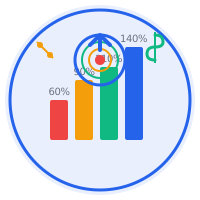
As we navigate through 2026, sales organizations face unprecedented challenges in quota planning. Market volatility, evolving buyer behaviors, and economic uncertainty require a more sophisticated approach to setting and managing sales quotas. Here are the best practices that leading organizations are implementing this year.
1. Data-Driven Foundation
Gone are the days of top-down quota setting based solely on revenue targets. Best-in-class organizations now leverage multiple data sources:
- Historical Performance Analysis: Review 3-5 years of attainment data, accounting for market conditions and organizational changes
- Market Intelligence: Incorporate TAM/SAM analysis, competitive landscape shifts, and industry growth rates
- Territory Potential: Use predictive analytics to assess the true opportunity in each territory or segment
- Rep Capacity: Factor in ramp time, tenure, and historical productivity patterns
2. Progressive Attainment Bands
Traditional quota structures with a single 100% attainment target are giving way to progressive band systems that better reflect performance distributions:
- Threshold (50-70%): Minimum acceptable performance with reduced commission rates
- Target (100%): Expected performance with standard commission rates
- Excellence (120-150%): High-performer range with meaningful accelerators
- Presidential Club (150%+): Elite performers with maximum accelerators and recognition
3. Quarterly Recalibration
Annual quotas remain important for planning, but leading organizations now implement quarterly reviews to adjust for material changes in territory composition, account for product availability or strategic pivots, address systematic over- or under-quota situations, and maintain motivation and fairness throughout the year.
4. Balanced Metrics
While revenue remains primary, sophisticated quota plans in 2026 incorporate multiple dimensions:
- New Business vs. Expansion: Separate quotas that reflect different sales motions and cycles
- Strategic Products: Weighted attainment for priority offerings or emerging solutions
- Customer Success Metrics: Retention, NPS, or time-to-value indicators that predict long-term value
- Pipeline Health: Leading indicators that ensure sustainable performance
5. Transparent Communication
The best quota plans are the ones that sellers understand and trust. Successful implementations include clear documentation of calculation methodologies, interactive calculators that let reps model scenarios, regular performance dashboards with attainment tracking, and open forums for questions and feedback on plan design.
6. Technology Enablement
Modern quota planning requires modern tools. Organizations are leveraging SPM platforms for sales performance management, CRM integration for real-time attainment tracking, scenario modeling tools for testing different structures before rollout, and mobile access so commission insights are available wherever sellers work.
7. Alignment with Company Strategy
Quotas must drive behaviors that support organizational goals. If you're focused on market share, structure rewards for expansion in strategic accounts. If profitability matters most, weight quotas by margin or discount compliance. If product mix is critical, create differential accelerators by product category. If customer lifetime value is key, emphasize retention and expansion metrics.
Common Pitfalls to Avoid
Even with best practices, organizations stumble on these issues:
- Sandbagging: Setting artificially low quotas to ensure bonuses undermines performance culture
- One-Size-Fits-All: Treating all territories or segments identically ignores market reality
- Complexity Overload: Plans with too many levers become impossible to understand or administer
- Static Thinking: Refusing to adjust quotas mid-year when circumstances change dramatically
- Ignoring Fairness: Systematic advantages or disadvantages in territory assignment erode trust
Looking Ahead
As AI and predictive analytics mature, we expect to see even more sophisticated quota planning in the coming years. Machine learning models will better predict territory potential, adaptive plans will automatically adjust to market conditions, and personalized quota structures will reflect individual seller circumstances and strengths.
The key is to start with solid fundamentals: use data, communicate clearly, align with strategy, and maintain flexibility. Organizations that master these principles in 2026 will be well-positioned for whatever changes lie ahead.
Try Our Commission Calculator
Model different quota and accelerator structures to see how they impact earning potential.
Calculate Commissions